Stranger than fiction?: Leseverstehen A1
3 Übungen auf Niveau A1 (Lesen) zum Thema „Stranger than fiction?“, mit Lösungen. Aufgaben bearbeiten und sofort prüfen. Kostenlos, ohne Konto.
Niveau Lesen
Bevor Sie beginnen. 3 Übungen. Lesen Sie jeden Text und beantworten Sie dann die Fragen.
Übung 1. Complete the professions with a, e, i, o and u. Then match them with the pictures (a-h) below.
34 Lücken- 1xplrr
- 2fshrmn
- 3j rnlst
- 4plt
- 5pltc n
- 6s lr
- 7sc ntst
- 8sld r
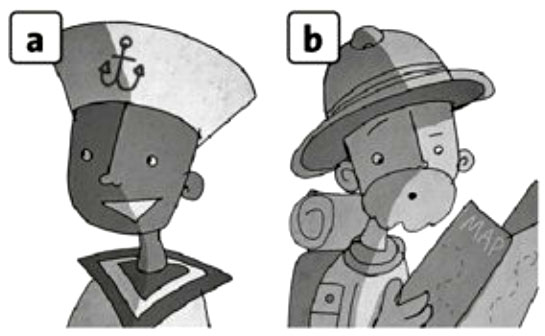
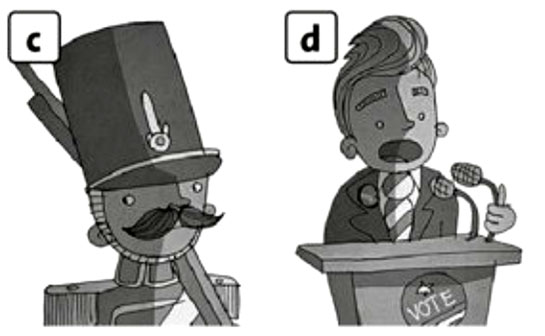
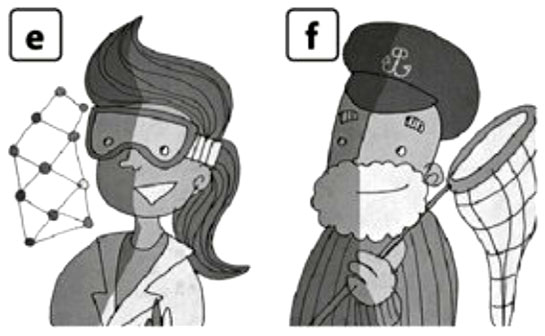
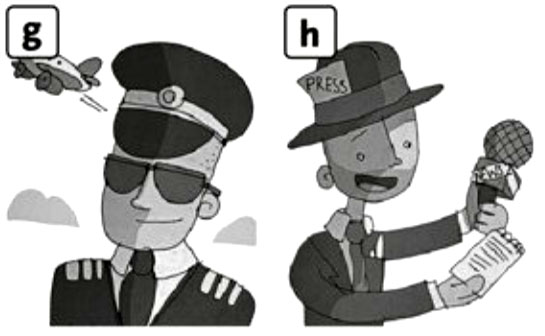
Übung 2. Read the text below. Whose story is easier to believe, according to the writer: Mr Ostman’s or Mrs Ultrup’s?
- THE DEWEY LAKE MONSTER
- On the west coast of Canada, there are stories of a very large creature, half human and half animal. Some people call it ‘Bigfoot’, but there are other names too, like ‘Sasquatch’. The descriptions of the creature are all very similar. It is about three metres tall. It stands and walks like a human, but it has thick, dark hair all over its body, like a bear or a gorilla. Sometimes, people take photos or videos of the creature, but most of them are not very clear – and scientists usually say they are fake. People tell stories about meeting Bigfoot, but they probably invent the stories because they want money or attention. For example, a man called Albert Ostman described a meeting with a Sasquatch in 1924: it captured him and carried him to its home. He stayed there for six days with the creature and its family, he said. But not many people believe this story.
- However, one story is more believable. It happened in Michigan, USA, in a place called Dewey Lake. In the summer of 1964, a woman called Mrs Ultrup described a meeting with a strange creature. It was about three metres tall and covered in hair. It chased her into her house and attacked her dog. She called the police. When they arrived, there were huge footprints in the ground outside Mrs Ultrup’s house. The police photographed the footprints, and the local newspaper reported the events. But this was not the end of the story. Other people in the Dewey Lake area reported seeing the creature. Three teenage girls called the police after seeing the creature beside the lake. Suddenly, the ‘Dewey Lake Monster’ was on news programmes around the country and people arrived with guns to look for it. But they couldn’t find it. To this day, the Dewey Lake Monster is still a mystery. The people at the centre of the stories are certainly not looking for attention or money; in fact, they do not want to talk about their experiences at all.
Übung 3. Read the Reading Strategy. The read the text again. Choose the correct answer: a, b or c.
Reading Strategy
When you do a multiple-choice task, treat each option as a true of false task. Remember that only one option – the correct answer – is true.
- 1Sasquatch and Bigfoot are
- a)two creatures from different parts of North America.
- b)two different names for the same creature.
- c)completely different creatures: one is real, the other is mythical.
- 2Bigfoot is similar to a human because
- a)it is about the same size as an adult human.
- b)its hair is similar to a human’s hair.
- c)it moves in a similar way to a human.
- 3Who or what did the Dewey Lake Monster attack, according to the stories?
- a)Mrs Ultrup.
- b)A dog.
- c)Three teenagers.
- 4The writer doesn’t think people invented stories about the Dewey Lake Monster to get attention. Why not?
- a)Because they don’t want to talk about it.
- b)Because the stories appeared in newspapers and news programmes.
- c)Because they called the police after seeing the creature.
Verwandte Übungen
Alle Lesen-Übungen anzeigen- Clothes and shopping2 Übungen
- Communication3 Übungen
- Daily life4 Übungen
- Entertainment3 Übungen
Lernen mit Lektionen
Hören Sie eine Aufnahme und schreiben Sie sie Satz für Satz mit
So üben Sie
- 1Lesen Sie jede Frage sorgfältig
- 2Schreiben Sie Ihre Antwort oder wählen Sie die richtige Option
- 3Klicken Sie auf „Antworten prüfen“, um Ihre Lücken zu bewerten, oder auf „Antworten zeigen“, um die Lösungen zu sehen
- 4Überprüfen Sie Fehler und versuchen Sie ähnliche Übungen
- 5Fahren Sie mit der nächsten Übung fort, wenn Sie bereit sind