A1
English Vocabulary Exercises for A1 – Wild animals
10 bài tập
A1 (Sơ cấp) từ vựng - "English Vocabulary Exercises for A1 – Wild animals". 10 exercises. Miễn phí, không cần đăng ký.
1. Do the puzzle using the picture clues. What are the two hidden animals?
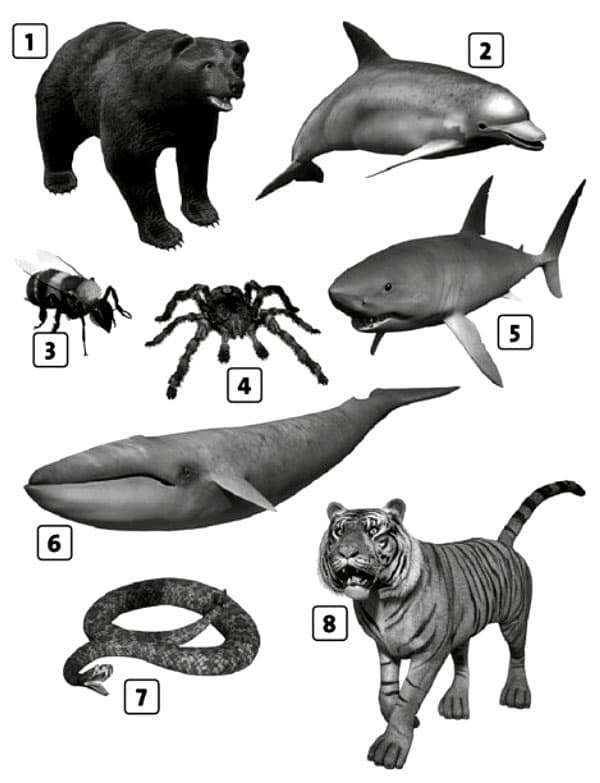
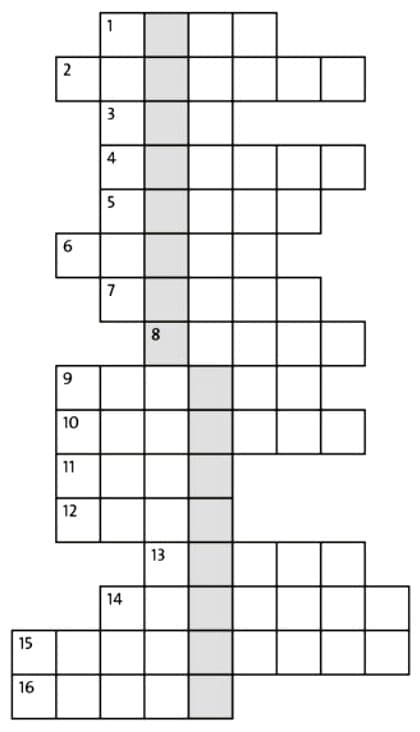
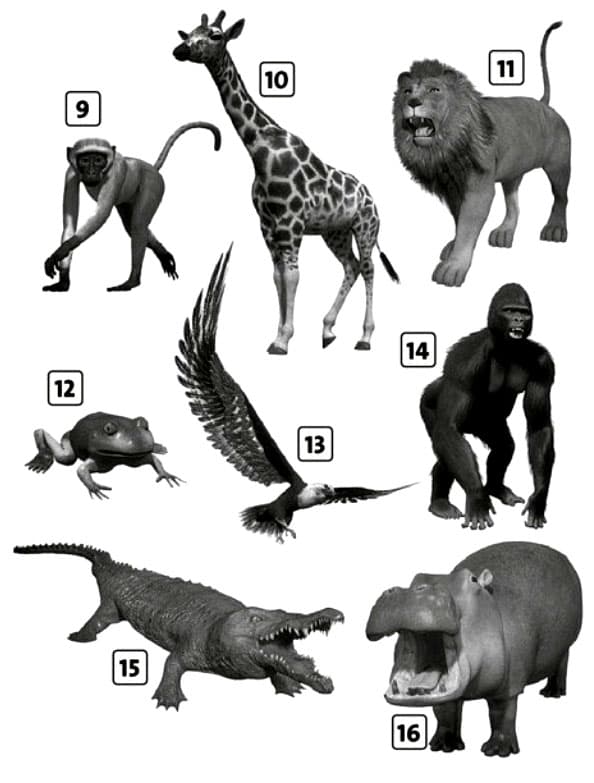
2. Look at the pictures of a wolf and a bird. Match items 1-8 in the pictures with the words below.
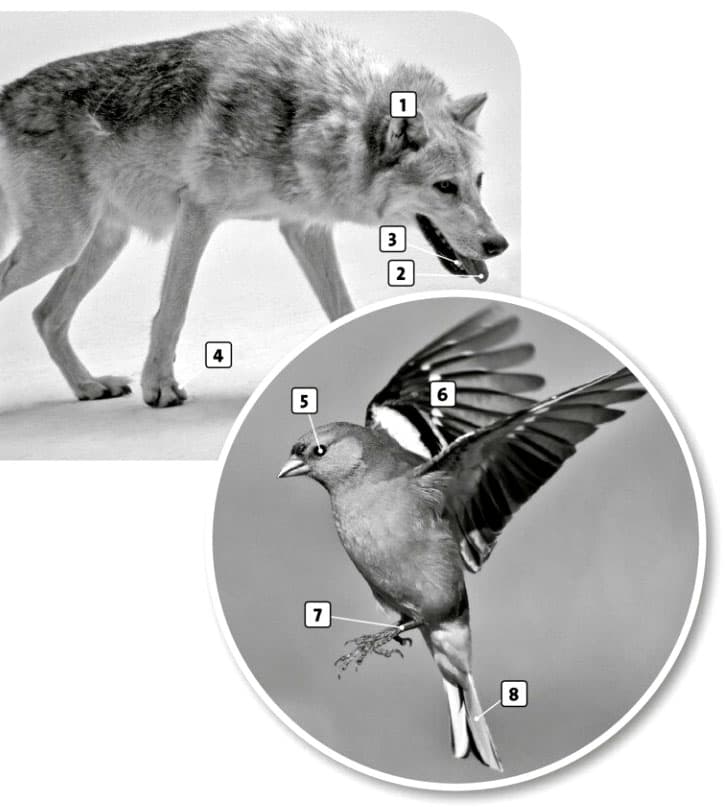
- ear legs
- paw tail
- eye mouth
- teeth wing
3. Answer the questions with animals from exercises 1 and 2.
- Which animals
- 1)haven’t got any legs?
- 2)have got wings?
- 3)have got six or eight legs?
- 4)have got four arms / legs and a tail?
4. Listen to four people describing animal photos. Which animal is each speaker talking about? Choose from the animals in exercise 1.
Audio
- Speaker 1 is describing a photo of a
- Speaker 2 is describing a photo of an
- Speaker 3 is describing a photo of a
- Speaker 4 is describing a photo of a
Extra exercises
5. Complete the definitions with six of the animals below.
- bee butterfly crocodile dolphin eagle elephant frog
- hippo shark snake spider wolf
- 1)A / An is an insect with big coloured wings.
- 2)A / An is a reptile with a long thin body and no legs.
- 3)A / An is a very big mammal from Africa or Asia with big ears and a long nose.
- 4)A / An is a large bird that can see very well.
- 5)A / An is a big fish that lives in the sea.
- 6)A / An is a small green animal that lives in and near water.
6. Answer the questions with parts of an animal.
- What does an animal use
- 1)to make sounds and to eat?
- 2)to fly?
- 3)to hear?
- 4)to see?
- 5)to walk and to stand?
7. Complete the sentences with ago, last or yesterday.
- 1)My grandparents arrived a few minutes
- 2)I watched a film on TV night.
- 3)My dad walked to work morning.
- 4)Maria started studying English ten years
- 5)We travelled to Canada summer.
8. Complete the sentences with the professions formed from the words in bold.
- 1)Joseph Pulitzer worked for different journals and newspapers. He was a
- 2)Marco Polo explored China and Central Asia. He was an
- 3)John F. Kennedy worked in politics in the 1950s and 60s. He was a
- 4)Captain James Cook was the first European to sail to Australia. He was a
- 5)Marie Curie was good at science, especially physics and chemistry. She was a
9. Complete the sentences.
- 1)It’s a beautiful day. There isn’t a cloud in the
- 2)In the Himalayas, there’s always snow on the
- 3)When I was a child, I loved playing with the sand on the
- 4)It was a clear night, so we could see the moon and all the
- 5)We stopped to have lunch on the grass under a
- 6)My sister doesn’t like driving in the dark, so she always tries to get home before
10. Match the first parts of sentences 1-6 with the second parts (a-f).
- 1)The women are walking
- 2)The boy is climbing
- 3)The children are lying
- 4)The girl is looking down
- 5)The men are facing
- 6)People are standing
- a)at the bus stop.
- b)at the floor.
- c)a tree.
- d)along a path.
- e)on the ground.
- f)the door.
Cách Luyện tập
- 1Đọc kỹ từng câu hỏi
- 2Viết câu trả lời của bạn hoặc chọn phương án đúng
- 3Nhấp vào 'Hiện Đáp án' để kiểm tra bài làm của bạn
- 4Xem lại bất kỳ lỗi nào và thử các bài tập tương tự
- 5Chuyển sang bài tập tiếp theo khi đã sẵn sàng
Bài Tập Liên Quan
Học với bài học
Xây dựng nền tảng với bài học âm thanh và video