A2
English Vocabulary Exercises for A2 – How do you feel?
9 Übungen
Baue deinen A2 (Elementar) Englisch-Wortschatz mit "English Vocabulary Exercises for A2 – How do you feel?" auf. 9 interaktive Wortübungen mit sofortigem Feedback. Kostenlos, ohne Anmeldung.
1. Look at the pictures and complete the puzzle with adjectives to describe feelings.
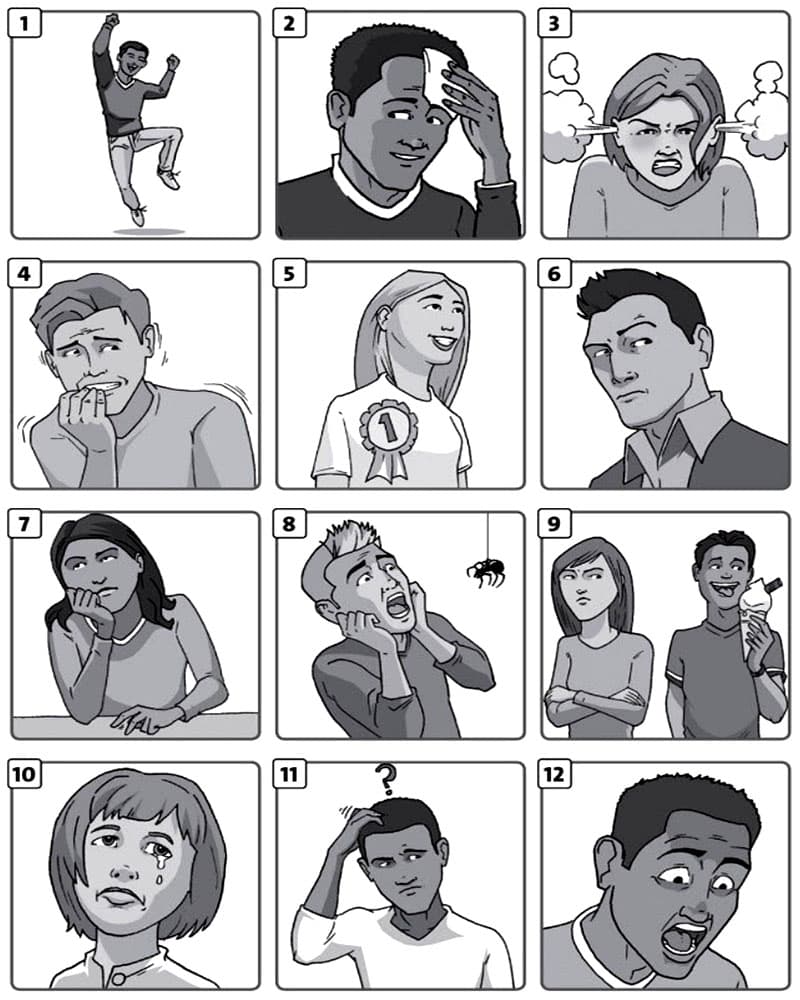
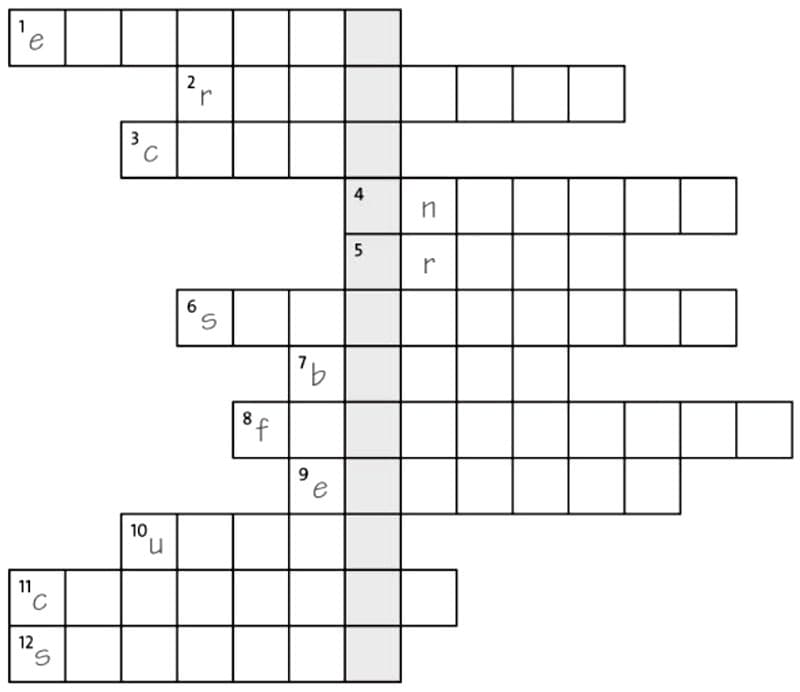
- What is the mystery word?
2. Which adjective best describes each person’s feeling? Use the adjectives below.
- anxious delighted embarrassed frightened
- proud relieved shocked upset
- 1)The waiter was really rude to me when I asked for a glass of water. I was a bit shocked.
- 2)I got a new smartphone for my birthdays. I was
- 3)My dad started to dance at my party and all my friends saw him! I was really !
- 4)My little brother won a singing competition. I was very
- 5)Our dog is very old and is really ill. I think he might die. We’re very
- 6)I’ve got a difficult, important exam tomorrow. I’m feeling a little bit
- 7)I went on the tallest, fastest ride at the theme park. I was really
- 8)I left my mobile on the bus, but someone found it. I was extremely
3. Listen. How are the people feeling? Choose from the adjectives below. There are two extra adjectives.
Audio
- ashamed cross delighted envious relieved suspicious
- Speaker 1
- Speaker 2
- Speaker 3
- Speaker 4
4. Complete the sentences with your own words.
- 1)I feel confused when
- 2)I feel bored when
- 3)I feel proud when
- 4)I feel excited when
- 5)I feel disappointed when
Extra exercises
5. Complete the sentences with the words below.
- anxious cross disappointed embarrassed envious relieved
- 1)Ted was very before his exams, but in the end he got excellent marks.
- 2)I’m so to know that you’re OK and that you didn’t get hurt in the accident.
- 3)I work all summer, so I’m of people who can take the summer off.
- 4)Sam was that he didn’t win the race, but he was happy that he took part in it.
- 5)She was extremely when she forgot the words to the song in front of hundreds of people.
- 6)I’m sorry I was with you. I had a very bad day.
6. Replace the underlined words in the sentences with the words below.
- bored confused delighted excited frightened suspicious
- 1)She was scared when her car broke down on a lonely country road at night.
- 2)I am really unsure about his instructions. Now I have no idea what to do!
- 3)The film made us so uninterested that we went home before it finished.
- 4)I’m very enthusiastic about studying abroad next year.
- 5)Alice was very happy that so many of her friends called her on her birthday.
- 6)I don’t want to be unwilling to believe, but do you think Alan is telling the truth?
7. Complete the sentences with the correct form of the verbs below.
- give have make take (x2) tell
- 1)You look really tired! You should stop revising and a break.
- 2)To the truth, I’m a bit bored with this TV programme.
- 3)Do you think we could a word with the teacher about our homework? I don’t really understand it.
- 4)Don’t offence at everything people say. It’s better to ignore negative comments.
- 5)We need to a plan for the party next week, otherwise we won’t be prepared.
- 6)Can you me a call tomorrow? I’ll have more time to talk then.
8. Complete the sentences. Choose the correct verb and use the past simple.
- 1)‘What happened to your hand? It’s very red.’
- ‘I (bleed / burn) it while I was cooking.’
- 2)‘Why is your ankle in a bandage?’ ‘I (trip / sprain) it while I was playing football.’
- 3)‘Why is your arm in a cast?’ ‘I (fall over / injure) and (break / burn) it while I was hiking.’
- 4)‘What are you doing on the floor?’ ‘I (slip / trip) over on some spilled water.’
- 5)‘Why is there blood on your coat?’ ‘I (cut / sprain) my hand this morning!’
- 6)‘Your hand is all blue.’ ‘I know. I (burn / hurt) it doing karate.’
9. Choose the correct answers.
- 1)If you don’t help, how can people know you need it?
- c) 2) I know you’re upset now, but I’m sure you’ll it in time.
- c) 3) Did you when the test is? I still don’t know the date.
- c) 4) I know he’s embarrassed by what he did, but he needs to his mistakes.
- c) 5) When you finish using my tablet, please could you on my desk?
- c
So üben Sie
- 1Lesen Sie jede Frage sorgfältig
- 2Schreiben Sie Ihre Antwort oder wählen Sie die richtige Option
- 3Klicken Sie auf 'Antwort zeigen', um Ihre Arbeit zu überprüfen
- 4Überprüfen Sie Fehler und versuchen Sie ähnliche Übungen
- 5Fahren Sie mit der nächsten Übung fort, wenn Sie bereit sind
Verwandte Übungen
Lernen mit Lektionen
Bauen Sie Ihre Grundlagen mit Audio- und Videolektionen auf