B1
Practice Listening Business English Exercises for B1 – Brands
6 Übungen
Übe B1 (Mittelstufe) Business-Englisch mit "Practice Listening Business English Exercises for B1 – Brands". 6 Übungen zur beruflichen Kommunikation mit sofortigem Feedback. Kostenlos, ohne Anmeldung.
1. Exercise 1
Audio
- A. Listen to three speakers starting a presentation to visitors to their organisation. Which ‘dos’ and ‘don’ts’ below does each speaker use?
- DO
- • Begin with a warm welcome – thank the audience for coming
- • State your name and job title (or say what you do)
- • Confirm the objective of the presentation
- • Explain the structure of the presentation
- • Say how long you will talk for
- • Let the audience know when to ask questions – during or at the end of the presentation
- • Move smoothly to the first point in the presentation
- DON’T
- • Apologise for your English (be confident and focus on expressing your ideas)
- • Worry about making mistakes (people want to listen to your ideas, not your grammar)
- • Rush things (take your time and give your audience time to understand the information)
B. Now look at three more unusual ways to start a presentation. What do you think is the value of using these techniques?
• Open with questions
• Begin by telling the audience about a conversation you had recently
• Start with a personal story
C. Listen to three more presentation openings and decide which unusual technique in B each speaker uses.
D. How effective do you think these alternative techniques were, and why? Would you be comfortable using them? Why / Why not?
2. Exercise 2
Audio
- A. Listen to the first speaker continuing his presentation and introducing his company. Note down the information he gives about the following.
- COMPANY PROFILE
- When established:
- Main strength:
- Size of workforce:
- Countries of operation:
- Plan for growth:
- B. How did the speaker react to the question? Do you think this is a good way to react to questions? Why / Why not?
3. Exercise 3
Audio
- A. Listen to some comments from customers and staff about Kloze-Zone. Match the speakers (1-6) with the problems (a-h). You need to match some speakers with more than one problem.
- a)Window displays do not always engage customers.
- b)Fast fashion is mostly marketed at women.
- c)Staff work long hours: from 9 a.m. to 7 p.m., including Saturdays and Sundays.
- d)The store should have more promotions and offers for customers.
- e)They should have more interesting marketing campaigns.
- f)Shop assistants don’t help customers in the fitting rooms.
- g)Staff turnover is fairly high in some locations.
- h)Brand awareness is low.
- B. Which of the issues mentioned relate to customers and which ones to staff? Which ones relate to both?
4. Exercise 4
Audio
- A. Listen to a woman talking about her company on the radio. Decide if the statements are true (T) or false (F).
- 1)Cynthia is used to being on the radio.
- 2)Her company exclusively makes woollen clothing.
- 3)The business developed from her hobby.
- 4)At first the clothes were sold only in local shops.
- 5)Cynthia took a course in clothing design.
- 6)Product placement boosted sales.
- 7)The jumpers are still hand-knitted.
- 8)Cynthia doesn’t want anything to do with woolly clothes in her retirement.
- B. Listen again and choose the correct option.
- 1)Why is the company name not really appropriate now?
- a)None of the clothes are made from wool.
- b)The clothes are made from several different materials.
- c)Most of the clothes are made from cotton.
- d)The clothes are for all seasons.
- 2)How did Cynthia feel about her early business?
- a)She was surprised at its success.
- b)She enjoyed her popularity.
- c)She was overwhelmed by the amount of orders she was receiving.
- d)She was disappointed.
- 3)The Woolly brand sells itself because
- a)the garments are expensive.
- b)the garments are unique.
- c)the garments are only made from good quality materials.
- d)a well-known celebrity advertises them.
- 4)Which country outside Britain did she first sell her clothes to?
- a)France
- b)Germany
- c)UFA
- d)Denmark
- 5)When did she first realise the importance of brand loyalty?
- a)From the beginning.
- b)When she got mail from different countries.
- c)When clients began to order tops in advance.
- d)When customers wrote to her personally.
- 6)Now her problem is that
- a)she doesn’t speak any Asian languages.
- b)she needs to employ more people.
- c)she needs to find reliable sales people.
- d)she needs a translating program for Asian languages.
- 7)What is her main focus for the future?
- a)to work on new designs and materials
- b)to expand into warmer markets
- c)to retire
- d)to learn another language quickly
- C. Choose the best title for the radio programme.
- a)Five rules for growing a business
- b Learning business the hard way
- c)Woolly – a success story
5. Test
Audio
- 1)Listen to the speaker and choose the correct response a, b or c.
- 1)a b c
- 2)a b c
- 3)a b c
- 4)a b c
- 5)a b c
6. You will hear eight short recordings twice. For questions 1–8 choose the correct answer.
Audio
- 2)You will hear eight short recordings twice. For questions 1–8 choose the correct answer.
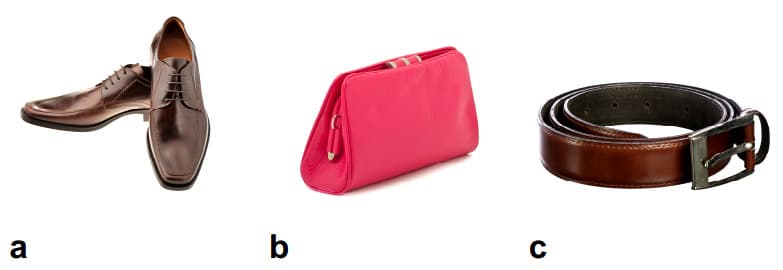
- 1)Which product had the biggest sales last year?
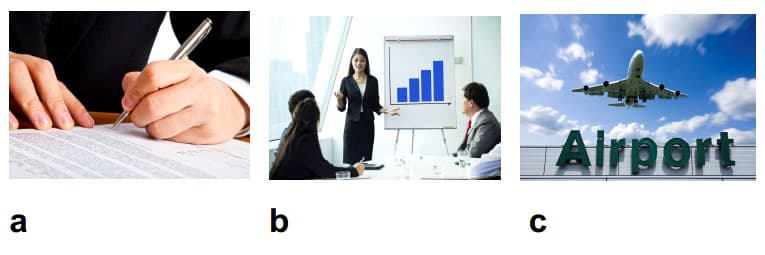
- 2)What is Julia going to do tomorrow?
- 3)Which date is the sales conference?
- a)20 April
- b)10 May
- c)20 May
- 4)What do the speakers decide to do?
- a)expand the product range
- b)bring the products up-to-date
- c)design a new logo
- 5)Where has the market grown dramatically?
- a)Europe
- b)China
- c)North America
- 6)Who are the company’s target customers?
- a)wealthy millennials
- b)professional women
- c)retired people
- 7)What is the company planning to invest in next year?
- a)staff
- b)new headquarters
- c)a factory
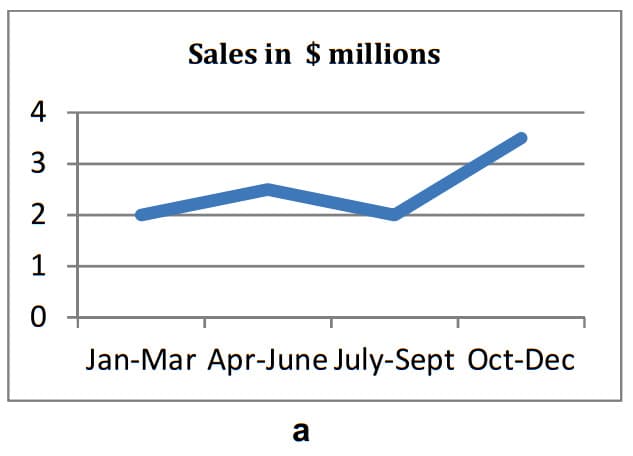
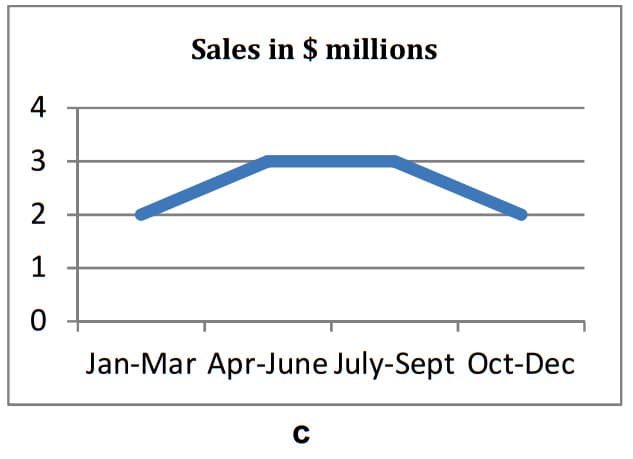
- 8)Which graph describes last year’s sales?
- c

So üben Sie
- 1Lesen Sie jede Frage sorgfältig
- 2Schreiben Sie Ihre Antwort oder wählen Sie die richtige Option
- 3Klicken Sie auf 'Antwort zeigen', um Ihre Arbeit zu überprüfen
- 4Überprüfen Sie Fehler und versuchen Sie ähnliche Übungen
- 5Fahren Sie mit der nächsten Übung fort, wenn Sie bereit sind
Verwandte Übungen
Lernen mit Lektionen
Bauen Sie Ihre Grundlagen mit Audio- und Videolektionen auf