Work patterns: الإنجليزية للأعمال A2
8 تمارين بمستوى A2 (إنجليزية الأعمال) حول «Work patterns» مع الإجابات. أكمل كل مهمة وتحقق منها فورًا. مجاني ولا يتطلب حسابًا.
مستوى إنجليزية الأعمال
قبل أن تبدأ. 8 تمارين · 9 مقاطع صوتية · 21:14. شغّل كل مقطع، ثم أنجز المهام.
تمرين 1. Listen to three people talking about their work patterns. Make notes about their jobs and working hours.
صوت · 3 فراغاتصوت
- Speaker 1
- Speaker 2
- Speaker 3
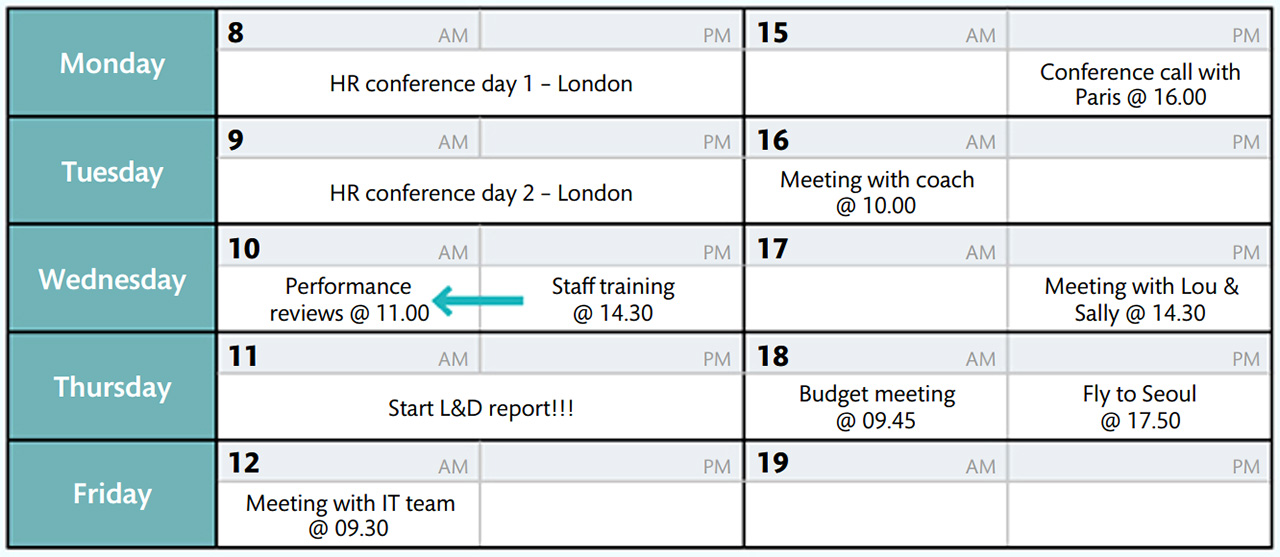
تمرين 2. Listen to Lou calling her colleague, Ian, about an appointment she made with him last week.
صوتصوت
- 1What date did Lou and Ian have an arrangement to meet?
- 2Why is that date now not possible?
- 3Does Lou want to make the appointment sooner or later? Why?
- 4Who’s available on the following dates?
- a)Wed 10, morning: Lou / Ian
- b)Wed 10, afternoon: Lou / Ian
- c)Thu 11, afternoon: Lou / Ian
- d)Fri 12, afternoon: Lou / Ian
- 5What does Ian offer to do to help?
- B. In their conversation, Lou apologises for changing the meeting time, while Ian tries to be helpful. Listen again and note down examples of what they say.
تمرين 3. Ian immediately calls his assistant, James. Listen and note down the changes they make to Ian’s schedule.
صوت · 5 فراغاتصوت 1
- B. Ian is more direct with James than Lou. Why do you think that is?
- C. Listen to Ian calling Lou back to confirm the details. Make brief notes.
- صوت 2
- MEETING PLANNER | Ian Henderson
- Date:
- Time:
- Location:
- Attending:
- Arrangements:
تمرين 4. Listen to Clara Olsen giving a presentation to the senior managers in Madrid about the company culture at Holsted. Find one difference between each point below and the presentation.
صوتصوت
- The Holsted company culture
- 1Employees work
4037 hours a week from Monday to Friday. - 2They are often expected to work long hours.
- 3The working hours are fixed for most employees.
- 4The work culture is very strict but effective.
- 5Managers are responsible for how employees organise their time and projects.
- 6Senior staff in the company can tell us their ideas and opinions.
- 7It’s important to arrive on time for work; it shows you are professional.
تمرين 5. Listen to part of a meeting between Clara Olsen, Vice President; Marina Beltran, Human Resources Manager; and Álvaro Martínez, Finance Manager; in Madrid. Look at Clara’s list of questions. Which questions are they discussing?
صوت · 6 فراغاتصوت
- MEETING ABOUT WORK PATTERNS
- 1What types of contracts are there? (full-time, part-time?)
- 2How much holiday do employees get?
- 3What are the working hours – start time, finish time?
- 4Does the company let employees work flexible hours?
- 5How long is the lunch break?
- 6Can employees work from home?
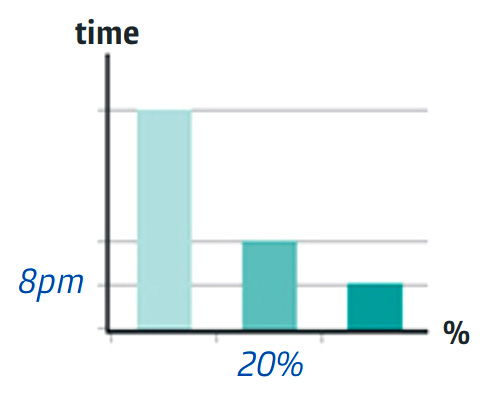
- B.Listen again and complete this extract from the meeting (0:00–0:32). Then complete the bar chart with the correct percentages and times.
- As you can see from this bar graph, the working day is very long here in the Madrid office. On an average day only (1) of our employees leave work by (2) o’clock. At (3) o’clock, (4) percent of the staff are still here in the office and (5) percent are still at their desks at (6) in the evening.
- C.Work in pairs. What is a suitable title for the graph?
- D.Listen to the rest of the meeting again (0:32–2:19) and answer the questions.
- 1What does Álvaro say about the lunch break?
- 2What do Marina and Álvaro disagree about?
- 3What does Marina say about staff working long days?
- 4What risks does she say are possible?
تمت الإجابة: 0 من 6
تمرين 6. Listen to an interview with a student and choose the jobs she does.
صوت · 8 فراغاتصوت
- 1working as a chef
- 2taking food orders
- 3serving food in restaurants
- 4pouring drinks at events
- 5delivering fast food
- 6delivering parcels
- 7working as a hotel receptionist
- 8working in a pharmacy
- 9working as a domestic cleaner
- 10promoting holiday events
- B.Listen again and decide if the statements are true (T) or false (F).
- 1Amy doesn’t have to pay rent.
- 2The flexibility of the gig economy is good for Amy.
- 3Amy doesn’t like working for the catering company.
- 4The interviewer doesn’t think being a bike courier is safe.
- 5Amy often delivers food to office staff.
- 6After she finishes university, Amy wants a job that offers training and a pension.
- C.Listen again and complete the sentences with one word.
- 1Amy is studying at the moment.
- 2She wants to work in the industry when she graduates from university.
- 3She needs to earn money to pay and buy food and clothes.
- 4When she has , she works less or stops working for a while.
- 5She says that some of her are also working in the catering and hospitality industry.
- 6She has done a lot of cycling and has never had an .
- 7As a courier, she often delivers parcels or .
- 8She is happy to carry on working in the economy while she is a student.
- D.Choose the sentence which best describes Amy.
- a)She’s hard-working and wants an interesting and secure job in the future.
- b)She’s relaxed about work and would like to continue working for different companies.
- c)She’s happy to work in a dangerous environment.
تمت الإجابة: 0 من 8
تمرين 7. Complete the dialogue between Pavel and Laila with the phrases in the box. Then listen and check.
صوت · 11 فراغًاصوت
- P: Pavel Orlov speaking.
- L: Pavel, hi. It’s Laila.
- P: Hi, Laila. What can I do for you?
- L: Well, (1) our meeting on Tuesday next week.
- P: You mean, the 12th? Do you want (2) ?
- L: No, no. It’s just that I’ve got a bit of a problem. You see, there’s a training session at our head office on Tuesday and I really have to be there.
- P: That’s OK. Don’t worry.
- L: I know it’s a bit (3) .
- P: No, that’s fine.
- L: So (4) we fix another time to meet?
- P: Fine. Let me just (5) . I’m free on Friday the 15th. How does the morning suit you?
- L: Oh sorry, Pavel. I’m busy all day on Friday. How about Thursday?
- P: No, sorry, Thursday’s (6) , I’m afraid. All-day meeting
- L: OK ... Um, can we bring (7) , maybe? How about Monday the 11th?
- P: Yeah, Monday’s good.
- L: Great. (8) for you: morning or afternoon?
- P: Morning’s fine.
- L: Right. So just (9) : the meeting will be on Monday the 11th.
- P: Yes, Monday morning. 9.30?
- L: Perfect. Thanks for being (10) , Pavel. I appreciate it.
- P: No problem. See you then.
| check my schedule do you mind if I’m calling about it forward out for me short notice so flexible to confirm to postpone it which is better |
تمت الإجابة: 0 من 10
تمرين 8. Test
صوتصوت
- 1You will hear eight short recordings twice. For questions 1–8 choose the correct answer.
- 1How many days a week does the man work?
- a)3
- b)5
- c)7
- 2What does the man do at lunchtime?

a 
b 
c - 3Who is going to finish preparing the presentation?
- a)Sandra
- b)Dmitri
- c)Rens
- 4What kind of work is the company offering?
- a)permanent
- b)flexible hours
- c)full time
- 5What do the man and woman decide to do about the staff party?
- a)delay it until summer
- b)book a restaurant now
- c)ask for different ideas
- 6What is the new meeting date?
- a)Monday 6 June
- b)Wednesday 8 June
- c)Monday 13 June
- 7What was the woman’s first job?
- a)a shop assistant
- b)delivering newspapers
- c)cleaner
- 8Where are they going to meet?

a 
b 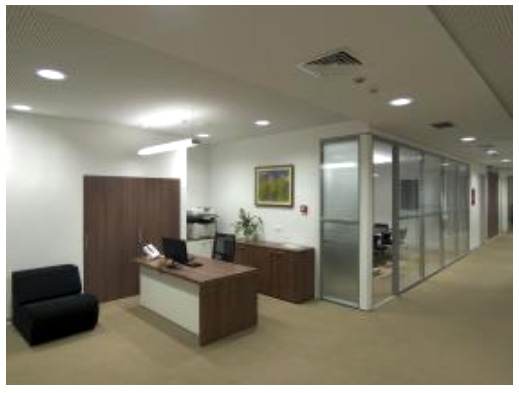
c
تمارين تطبيقية ذات صلة
عرض جميع تمارين إنجليزية الأعمال- Advertising5 تمارين
- Business location5 تمارين
- Changes3 تمارين
- Company facts4 تمارين
تعلّم مع الدروس
استمع إلى تسجيل واكتبه جملة جملة
كيفية التدريب
- 1اقرأ كل سؤال بعناية
- 2اكتب إجابتك أو اختر الخيار الصحيح
- 3انقر على «تحقق من الإجابات» لتصحيح الفراغات، أو «أظهر الإجابات» لرؤية مفتاح الإجابات
- 4راجع أي أخطاء وجرب تمارين مشابهة
- 5انتقل إلى التمرين التالي عندما تكون مستعداً